Understanding Romance Literature Terminology: Key Concepts Explained

Romance literature has captured the imaginations of millions, centering its stories on the powerful journey of falling in love and making connections that change lives. Most people think romance novels follow a simple formula, but only a handful realize how intricate and emotional these stories actually are. In fact, nearly every romance novel guarantees an emotionally satisfying ending and features deeply complex character growth, making this genre far richer than the old stereotype suggests.
Table of Contents
- What Is Romance Literature And Its Core Elements?
- Why Understanding Terminology Matters In Romance Literature
- Key Themes And Tropes Defining Romance Novels
- Character Archetypes And Their Roles In Romantic Stories
- The Influence Of Setting On Romance Literature
Quick Summary
| Takeaway | Explanation |
|---|---|
| Romance literature focuses on love’s emotional journey. | Central narratives explore characters' growth and connection through romantic challenges and resolutions. |
| Characters must evolve through their romantic journey. | Authentic development of protagonists is essential for creating relatable and compelling love stories. |
| Setting enhances emotional depth in romance stories. | Locations act as dynamic elements that reflect characters' emotions and influence their relationships and plot developments. |
| Understand genre terminology to appreciate nuances. | Familiarity with specialized language helps readers and writers engage deeply with the emotional and narrative strategies of romance. |
| Common tropes drive emotional exploration in romance. | Recurring themes like friends to lovers and second chances reveal complex human experiences and growth within relationships. |
What is Romance Literature and its Core Elements?
Romance literature is a captivating genre that centers on the emotional journey of characters falling in love, exploring human connections through compelling narratives. Dive deeper into literary inspirations to understand how writers craft these transformative stories.
The Essential Narrative Structure
At its core, romance literature follows a specific narrative framework that distinguishes it from other fictional genres. According to the Library of Congress, romance fiction primarily depicts romantic love with distinct characteristics:
- A central love story focusing on two individuals
- Significant emotional and personal challenges preventing immediate romantic connection
- An emotionally satisfying resolution that provides hope and optimism
Key Characteristics of Romance Novels
Romance novels are more than simple love stories. They represent complex explorations of human emotions, personal growth, and relationship dynamics. The genre demands:
- Authentic character development where protagonists evolve through their romantic journey
- Realistic obstacles that test the characters' commitment and emotional resilience
- A guaranteed emotionally positive conclusion that reassures readers of love's transformative power
Understanding romance literature requires recognizing its commitment to emotional truth and the celebration of human connection.
To clarify the foundational elements that define romance literature, the following table summarizes the core features distinguishing the genre from other fictional forms.
| Core Element | Description |
|---|---|
| Central Love Story | Focuses on the developing romantic relationship between two primary characters |
| Significant Emotional Challenges | Characters must overcome meaningful internal or external obstacles to find love |
| Emotional and Personal Growth | Protagonists authentically evolve throughout their romantic journey |
| Realistic Relationship Obstacles | Genuine barriers test the characters' commitment and emotional resilience |
| Emotionally Satisfying Resolution | Stories conclude with a positive, hopeful ending that reinforces love's transformative potential |
Why Understanding Terminology Matters in Romance Literature
Terminology in romance literature serves as a critical navigation tool, helping readers and writers decode the intricate language and conventions that define this vibrant genre. Explore the evolving landscape of romance writing to appreciate how specialized language shapes storytelling.
Language as a Narrative Gateway
Romance literature employs a unique linguistic framework that goes beyond traditional storytelling. According to scholarly research, language in this genre becomes an active narrative element, where words are not merely descriptive but serve as complex communicative tools that reveal deeper emotional landscapes.
- Specialized vocabulary that captures nuanced emotional experiences
- Linguistic patterns that signal genre conventions and reader expectations
- Narrative techniques that transform language into an emotional conduit
Decoding Genre Conventions
Understanding romance literature terminology allows readers and writers to recognize and appreciate the genre's sophisticated communication strategies. These specialized terms help:
- Interpret the unspoken emotional subtext within romantic narratives
- Recognize narrative structures that distinguish romance from other genres
- Appreciate the intentional complexity of character interactions and development
By mastering the terminology, readers gain a deeper appreciation for the artistry behind romance narratives, transforming reading from a passive experience into an engaged dialogue with the text. Writers, in turn, can more effectively craft stories that resonate with the genre's rich emotional and linguistic traditions.
Key Themes and Tropes Defining Romance Novels
Romance novels are rich tapestries of emotional complexity, woven together through recurring themes and narrative patterns that resonate deeply with readers. Discover the inspirational core of romance storytelling to understand how these literary archetypes capture human experiences.
Fundamental Narrative Tropes
According to Encyclopaedia Britannica, romance novels rely on several foundational tropes that provide familiar yet compelling narrative frameworks:
- Friends to Lovers: Characters transition from platonic relationships to romantic connections
- Enemies to Lovers: Initial antagonism transforms into passionate romantic tension
- Forbidden Love: External barriers challenge romantic relationships
- Second Chance Romance: Reuniting characters who previously shared a romantic connection
Emotional Landscapes and Thematic Explorations
Beyond surface-level plot devices, these tropes serve profound emotional purposes. They explore complex human experiences such as:
- Personal growth and emotional vulnerability
- Overcoming societal or personal obstacles
- Exploring power dynamics in relationships
- Challenging preconceived notions about love and connection
These narrative strategies allow romance novels to transcend simple love stories, offering nuanced explorations of human connection, personal transformation, and the intricate emotional journeys that define meaningful relationships.
For readers exploring the recurring patterns and dynamics within romance novels, the following table compares several commonly used romantic tropes and the key emotional themes they highlight.
| Romantic Trope | Description | Key Emotional Themes |
|---|---|---|
| Friends to Lovers | Platonic friends develop romantic feelings | Trust, vulnerability, slow growth |
| Enemies to Lovers | Initial antagonism evolves into mutual attraction | Tension, transformation, passion |
| Forbidden Love | Love faces external barriers or societal opposition | Sacrifice, risk, longing |
| Second Chance Romance | Former lovers reconnect and rekindle their relationship | Forgiveness, growth, nostalgia |
| Protective Partner | Character provides emotional/physical security | Safety, support, reassurance |
Character Archetypes and Their Roles in Romantic Stories
Romance literature thrives on complex character interactions, with distinct archetypes driving narrative depth and emotional resonance. Explore the nuances of character evolution to understand how these narrative personalities shape romantic storytelling.
Primary Romantic Character Archetypes
Romance novels feature several foundational character types that create narrative tension and emotional complexity. These archetypes serve as crucial storytelling mechanisms:
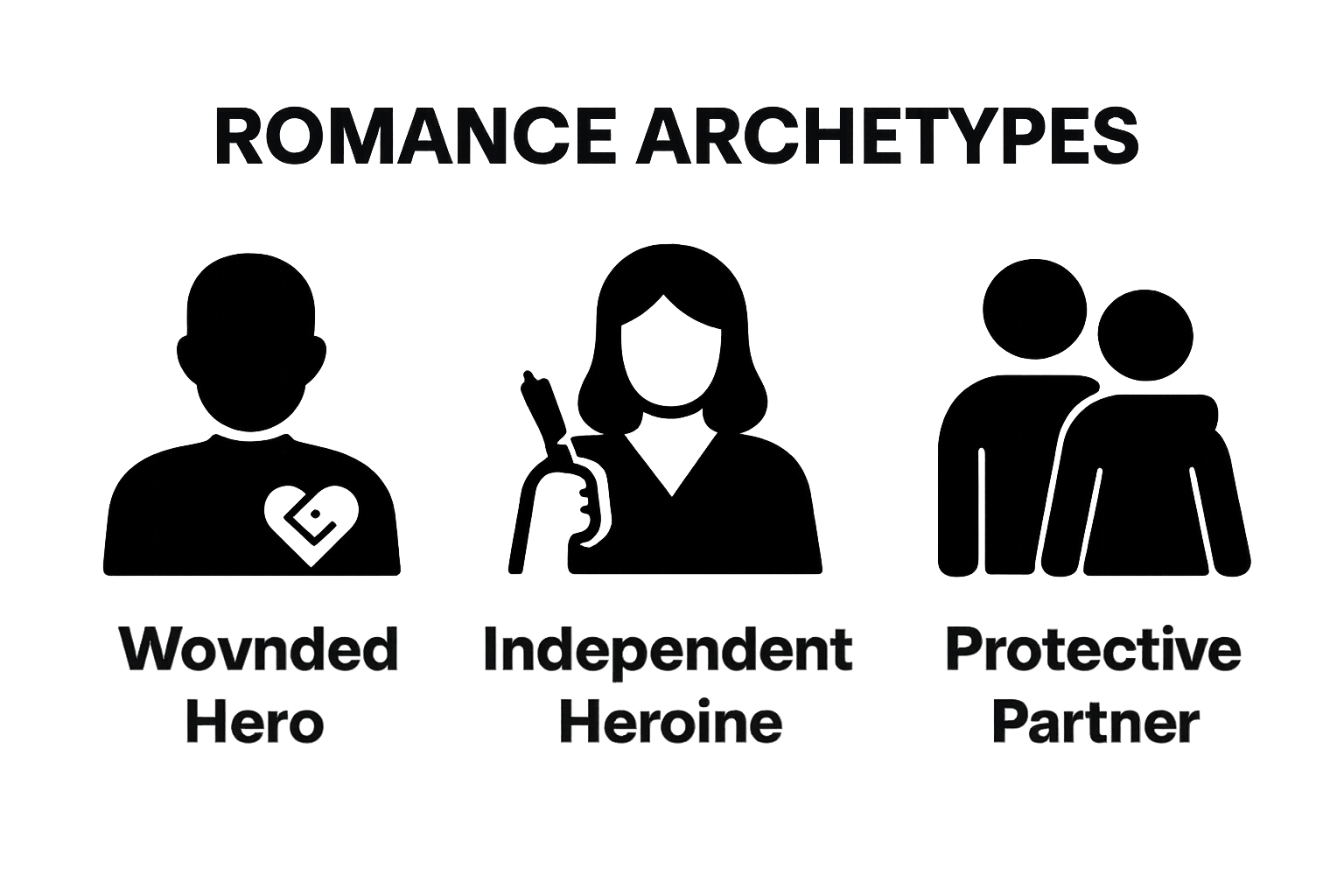
- The Wounded Hero: A character carrying emotional scars who requires healing through love
- The Independent Heroine: A strong female protagonist who challenges traditional romantic expectations
- The Protective Partner: A character who provides emotional and physical security
- The Transformative Love Interest: Someone who catalyzes personal growth and self-discovery
Psychological Dynamics and Character Interaction
Character archetypes in romance literature are not static representations but dynamic psychological constructs that evolve through interpersonal relationships. Research from Indiana University suggests these archetypes function as complex narrative tools that:
- Represent broader human emotional experiences
- Challenge societal expectations about love and relationships
- Demonstrate the transformative power of emotional vulnerability
- Provide readers with models of personal growth and romantic connection
These archetypes transcend simplistic character definitions, offering profound insights into human emotional landscapes and the intricate ways individuals connect, heal, and grow through romantic relationships.
The Influence of Setting on Romance Literature
Setting emerges as a profound narrative element in romance literature, transforming mere geographical locations into emotional landscapes that deeply shape character experiences and storylines. Learn more about crafting immersive literary environments to understand how location becomes a character in its own right.
Emotional Topography and Narrative Context
According to the Romantic Novelists' Association, settings in romance novels transcend physical descriptions, serving as powerful psychological and emotional frameworks that:
- Reflect characters' internal emotional states
- Create atmospheric tension and narrative momentum
- Symbolize metaphorical journeys of personal transformation
- Provide contextual depth to romantic interactions
Setting as a Narrative Catalyst
Romance literature leverages settings as dynamic storytelling mechanisms that actively influence plot development and character interactions. These environments are not passive backdrops but active narrative participants that:
- Introduce external challenges and obstacles
- Highlight cultural and social dynamics affecting romantic relationships
- Create unique sensory experiences that enhance emotional resonance
- Represent metaphorical spaces of personal growth and romantic discovery
By integrating settings as complex narrative elements, romance novels transform geographical locations into intricate emotional landscapes that mirror and amplify characters' internal journeys of love, vulnerability, and personal transformation.

Transform Your Newfound Romance Knowledge Into an Unforgettable Escape
After learning the building blocks of romance literature in our article, are you eager to dive into stories where every term and trope comes to life? If grasping character archetypes, emotional landscapes, and transformative settings left you hungry for real-world examples, Marina Miles Books was made for you. Our novels bring the subtleties of romance terminology to vivid reality with sweeping tales set against Italy's breathtaking backdrops. Every story showcases the very elements you explored—from dynamic protagonists seeking second chances to settings that shape destinies.

Why settle for understanding romance theory when you can experience it firsthand? Step into Sunlit Paths to the Amalfi Coast and let our immersive narratives and evocative Italian settings draw you closer to love's true meaning. Do not miss your chance to pre-order and get lost in a world where emotion, language, and place come together. Visit Marina Miles Books now and take your next step from learning to living the romance.
Frequently Asked Questions
What are the core elements of romance literature?
Romance literature centers on the emotional journey of characters falling in love, featuring a central love story, significant challenges to that love, and an emotionally satisfying resolution.
How do language and terminology shape romance literature?
Terminology in romance literature helps readers and writers decode complex emotional landscapes. It provides a specialized vocabulary that enhances understanding of character dynamics and narrative structures.
What are some common themes found in romance novels?
Common themes in romance novels include personal growth, overcoming obstacles, exploring power dynamics in relationships, and challenging societal notions about love.
What role do character archetypes play in romance stories?
Character archetypes in romance literature, such as the Wounded Hero or the Independent Heroine, drive emotional complexity and narrative depth, representing broader human experiences and facilitating personal growth through love.


Comments
Post a Comment